Aug 20, 2026
Sheet metal fabrication is becoming increasingly focused on precision, flexibility, and production efficiency. As manufacturers handle more complex designs, shorter production cycles, and changing customer requirements, traditional manual processes can make it difficult to maintain consistent quality and productivity.
This is one reason why an automatic CNC machine has become an important solution for modern metalworking. By using computer-controlled processes, CNC equipment can help manufacturers perform cutting, bending, and other operations with greater repeatability while reducing unnecessary manual intervention.
For companies planning to upgrade their sheet metal production capabilities, the key is not simply choosing a machine with advanced specifications. It is more important to understand how different CNC technologies fit into the complete production workflow.
Why Are Automatic CNC Machines Becoming More Important?
In conventional sheet metal production, operators may need to measure, position, cut, bend, and inspect components through several separate steps. Repeated manual operations can increase handling time and make consistency more difficult to maintain, particularly when production volumes increase.
An automatic CNC machine allows programmed instructions to control important processing movements. Once the appropriate program has been established, the same operation can be repeated more consistently across different production batches.
This is especially useful for manufacturers producing:
Repetitive sheet metal components
Custom metal parts with different designs
Complex cutting profiles
Electrical and industrial enclosures
Automotive and machinery components
Short- and medium-volume production runs
Automation is also becoming a practical response to labor and productivity challenges. Rather than eliminating skilled operators, CNC automation can reduce repetitive manual work and allow employees to focus more on programming, quality control, equipment management, and process improvement.
Cutting and Bending: Two Essential Steps in Sheet Metal Fabrication
Most sheet metal products require more than simply cutting a flat sheet. After the material is cut into the required profile, it may need to be bent, formed, assembled, or further processed before becoming a finished component.
This means that cutting and bending should be considered as connected stages of the manufacturing process.
A highly accurate cutting process provides a better starting point for subsequent forming operations. At the same time, consistent bending is essential for turning the cut component into a finished part that meets the required dimensions.
For manufacturers looking to improve overall production efficiency, both technologies deserve careful consideration.
Fiber Laser Cutting for Precision Metal Processing
Fiber laser technology has become an important solution for modern metal cutting because it can process complex profiles directly from digital designs.
Compared with many traditional cutting methods, laser cutting provides manufacturers with greater flexibility when producing parts with irregular contours, holes, slots, and other detailed features.
The development of fiber laser technology is also closely connected with the wider trend toward automated sheet metal production. Manufacturers are increasingly looking at not only cutting performance but also programming, material handling, workflow integration, and production efficiency.
CNC Bending for Consistent Forming
After cutting, many components require one or more bending operations. These may include brackets, panels, machine covers, housings, frames, and other industrial components.
A CNC bending system uses programmed movements to control the forming process. This can improve repeatability and reduce the dependence on manual positioning, particularly when the same components need to be produced repeatedly.
For manufacturers with a significant amount of bending work, selecting an appropriate CNC bending solution can therefore have a direct impact on production efficiency.
Advanced Fiber Laser Cutting Machine for Modern Metal Cutting
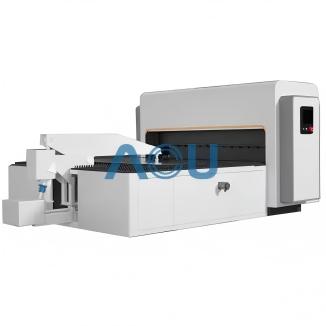
The advanced fiber laser cutting machine available in ACU's CNC Machine category is designed for CNC-controlled metal cutting applications.
According to the product information provided by ACU, the machine uses fiber laser technology and can be applied to materials such as steel, stainless steel, aluminum, brass, and copper, depending on the specific machine configuration.
Explore the Advanced Fiber Laser Cutting Machine →
For manufacturers, a fiber laser cutting machine can be particularly useful when production requires accurate and repeatable profiles.
Typical applications may include industrial machine components, metal panels, electrical enclosures, brackets, automotive parts, construction components, and other fabricated metal products.
The biggest advantage is flexibility. Instead of producing only one fixed shape, the machine can process different programmed designs, making it suitable for manufacturers that need to handle multiple product specifications.
What Should Buyers Consider Before Choosing a Fiber Laser Cutting Machine?
Machine selection should start with the actual production requirements rather than focusing only on maximum machine specifications. Manufacturers should consider:
Material types
Typical material thickness
Maximum sheet dimensions
Common part geometries
Production volume
Required cutting accuracy
Available factory space
Expected future production needs
For example, a manufacturer primarily processing thin stainless steel sheets may have very different requirements from a company producing heavier structural components.
The most suitable CNC metal cutting machine is therefore the one that matches the company's real production conditions.
Press Arm CNC Bending Center for Efficient Forming
Cutting is only the beginning of the sheet metal manufacturing process. For many fabricated components, bending determines whether the final product can achieve the required shape and dimensional consistency.
The press arm CNC bending center is another solution available from ACU for CNC-controlled sheet metal forming applications.
According to ACU's product information, the machine features a cage-type welded bed and is designed with a focus on stability and efficient bending performance.
Explore the Press Arm CNC Bending Center →
A CNC bending center can be useful for manufacturers producing components that require repeated bending operations and consistent positioning.
Instead of relying entirely on manual measurements and adjustments, programmed CNC operations can help operators maintain a more consistent production process.
Where Can a CNC Bending Center Be Used?
CNC bending equipment can support the production of many types of sheet metal components. Common examples include:
Electrical enclosures
Equipment housings
Metal brackets
Machine panels
Automotive components
Construction parts
Industrial frames and covers
The actual suitability of a bending machine depends on the component design, material, thickness, bending sequence, and production requirements.
For this reason, manufacturers should ideally provide representative drawings or workpiece information when discussing equipment options with a supplier.
Should You Choose Cutting or Bending Equipment First?
For manufacturers upgrading their production lines, this is not necessarily an either-or decision.
A fiber laser cutting machine and a CNC bending center perform different but complementary functions. The laser cutting process creates the required flat-sheet profile, while the bending process transforms that component into its final three-dimensional shape.
Digital Design → CNC Cutting → Material Sorting → CNC Bending → Inspection → Assembly
If cutting becomes much faster but bending remains largely manual, bending may become the new bottleneck.
Similarly, investing heavily in bending capacity without improving upstream cutting efficiency may leave the forming equipment waiting for material.
The better strategy is to evaluate the complete workflow and identify the stage that currently limits production.
How to Choose the Right Automatic CNC Machine
Purchasing CNC equipment is a long-term investment, so manufacturers should evaluate more than the machine's basic specifications.
1. Start With Your Materials
Identify the materials most commonly used in production. Steel, stainless steel, aluminum, brass, and other metals can have different processing characteristics. The equipment should therefore be selected according to the actual material mix rather than occasional production requirements.
2. Analyze Your Typical Part Sizes
Consider both the largest and most common sheet sizes used in production. A machine that is technically capable of processing very large sheets may not necessarily be the most practical choice if most daily production involves smaller components.
3. Look at Part Complexity
Simple rectangular parts and complex components with multiple holes, contours, or bending operations can require very different production solutions. Review several representative parts instead of evaluating the machine based on a single product.
4. Consider Production Volume
Production volume can significantly influence the value of automation. For highly repetitive production, automated CNC processes can help improve consistency and reduce repetitive manual work. For customized or lower-volume production, flexibility and ease of programming may be more important.
5. Identify Your Current Bottleneck
Before purchasing equipment, ask where production is currently losing the most time: Is the problem cutting? Is material handling slowing down production? Is manual bending creating inconsistencies? Or is the bottleneck caused by setup and changeover time? The answer can help determine which type of automatic CNC machine should be prioritized.
The Shift Toward More Connected Sheet Metal Production
Another important development in modern manufacturing is the movement from standalone machines toward more connected production processes.
Automation is increasingly being considered together with digital programming, material handling, production planning, and process monitoring. This does not mean every manufacturer needs a completely automated factory. For many companies, a gradual approach can be more practical.
A manufacturer may first introduce CNC laser cutting, then improve bending automation, followed by better material handling and production management. This step-by-step approach allows companies to address their biggest production problems first while keeping investment aligned with actual business requirements.
How Cutting and Bending Work Together
One of the most important considerations in sheet metal production is maintaining a balance between cutting and forming capacity. A manufacturer may have excellent cutting performance but still experience delays if the bending process cannot keep up. Likewise, a highly efficient CNC bending center cannot operate efficiently if cut components are not supplied at the required rate.
This is why manufacturers should evaluate both processes when planning a new production line. For companies producing complete fabricated components, combining an Advanced Fiber Laser Cutting Machine with a suitable Press Arm CNC Bending Center can create a more coordinated workflow from flat sheet to finished component.
Practical Questions to Ask Before Buying CNC Equipment
What materials do you process most frequently?
Knowing the material type and thickness range helps narrow down suitable equipment.
What products do you manufacture?
Representative drawings or finished parts can provide more useful information than a general description.
How much do you produce?
Production volume helps determine whether automation should focus on flexibility, repeatability, or throughput.
Where is the current bottleneck?
Understanding the existing production problem makes it easier to select equipment that delivers practical value.
What do you expect to produce in the future?
A machine should not only meet today's requirements. Future product development and production changes should also be considered.
FAQ About Automatic CNC Machines
What is an automatic CNC machine?
An automatic CNC machine uses computer-controlled instructions to perform manufacturing operations with limited manual intervention. In sheet metal fabrication, CNC technology can be used for cutting, bending, punching, and other metalworking processes.
What is an Advanced Fiber Laser Cutting Machine used for?
An Advanced Fiber Laser Cutting Machine is used to cut metal sheets into programmed shapes and profiles. It can be suitable for different industrial applications depending on the material, thickness, machine configuration, and production requirements.
What is a Press Arm CNC Bending Center?
A Press Arm CNC Bending Center is CNC-controlled equipment designed for sheet metal bending and forming. It can help manufacturers achieve more consistent positioning and repeatable bending operations.
Do I need both laser cutting and CNC bending equipment?
It depends on the production process. If your products require both cutting and bending, evaluating the two processes together can help create a more balanced production workflow and reduce potential bottlenecks.
How do I choose the right CNC sheet metal machine?
Start with your actual production requirements, including material type, thickness, sheet size, component geometry, production volume, required operations, and available factory space. Representative product drawings can also help a machinery supplier recommend a suitable solution.
Build a More Efficient Sheet Metal Production Process With ACU
Modern sheet metal fabrication is moving toward greater automation, consistency, and process integration. Choosing the right equipment is therefore not simply about selecting the machine with the highest specifications. It is about finding a solution that fits the materials, products, production volume, and workflow of your factory.
From precision cutting with an advanced fiber laser cutting machine to efficient forming with a press arm CNC bending center, ACU provides CNC solutions for different stages of sheet metal processing.
If you are planning to upgrade your production capabilities or looking for a suitable automatic CNC machine, visit ACU Machinery to explore available equipment and learn more about its CNC Machine solutions.
Read More



 Signup our newsletter to get update information, news, insight or promotions.
 FOSHAN ACU IMP.&EXP.CO.,LTD.

 IPv6 network supported