leave a message
If you are interested in our products and want to know more details,please leave a message here,we will reply you as soon as we can.

Your HVAC system's performance is only as strong as its weakest link, and the air damper machine is often that overlooked component. Selecting this component strategically impacts energy savings, comfort, and system longevity. This article covers two main pillars: analyzing your application for the correct type and reviewing critical specifications like air leakage class and pressure drop. This ensures long-term value.
Match the damper type to your system's core function. This ensures correct design for balancing, fire safety, or automation.
Choose a damper with low air leakage and low pressure drop. These features save energy and reduce fan power costs.
Select materials based on your environment. Ensure actuator torque and signal match your control system for reliable operation.
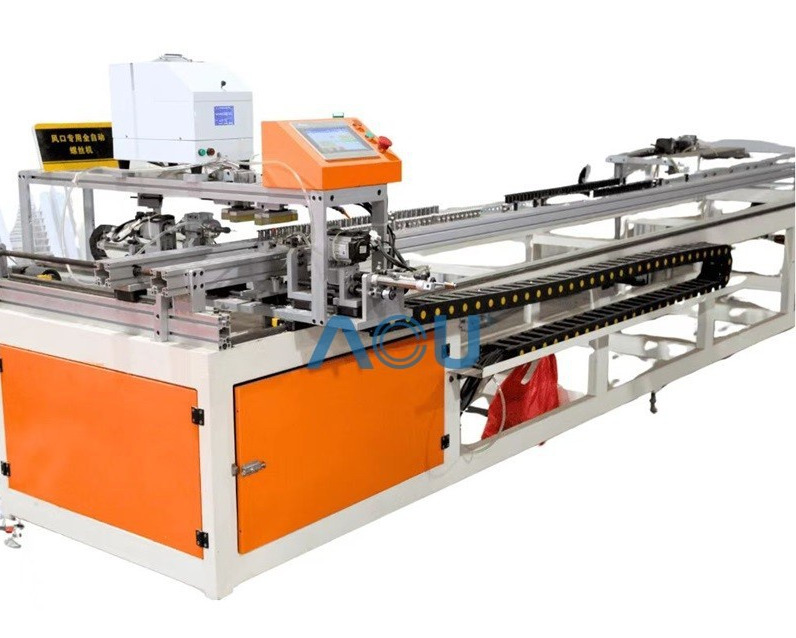
Before you evaluate any product specifications, you must define what the damper must accomplish within your specific HVAC system. The "best" air damper machine is not the most expensive or the most feature-rich option; it is the one that matches your system's core function, environmental conditions, and control requirements.
Start by identifying the primary role the damper will play. Each function demands a different blade design and operating mechanism. The table below maps common HVAC functions to their recommended damper types.
|
Core Function |
Recommended Damper Type |
Selection Rationale |
|---|---|---|
|
Airflow balancing between rooms |
Opposed Blade Damper (OBD) |
Precise airflow adjustment; installs behind diffusers and grilles |
|
Fire protection in commercial buildings |
Fire Damper |
Closes automatically upon high temperature to prevent fire spread |
|
Automated or sensor-based control |
Motorized Damper |
Enables remote adjustments; low-leakage operation reduces energy loss |
|
Constant airflow in critical environments |
Constant Air Volume (CAV) Damper |
Maintains fixed airflow regardless of system pressure changes |
For simpler applications, manual dampers offer a lower upfront cost and straightforward installation. They suit areas with stable occupancy and minimal airflow changes. Motorized dampers, however, provide automated adjustment based on real-time conditions. They excel in multi-zone buildings with fluctuating occupancy and temperature demands. Within the motorized category, choose modulating motors for VAV systems, two-position motors for fresh air intakes, and spring-return motors for fail-safe operations. This decision framework applies to every air damper machine you evaluate, regardless of manufacturer claims.
You must also verify performance limits against your operating conditions. Check the damper's maximum allowable air velocity and pressure drop using AMCA-tested data. If your duct velocity exceeds the damper's rating, the unit is unsuitable regardless of its price. For fire and smoke dampers, compliance with UL 555 and UL 555S standards is non-negotiable. Dynamic fire damper ratings must include airflow and closure pressure ratings, and the installed damper must exceed worst-case expected values.
The operating environment dictates your material choice. Aluminum offers lightweight, corrosion-resistant performance, making it ideal for humid areas or load-limited structures. Galvanized steel provides strength and durability for industrial and fire-protection systems. ABS or plastic construction works only for light ventilation applications. For harsh environments such as marine or chemical settings, custom-engineered dampers allow proper material selection to handle temperature extremes and corrosive media, preventing premature failures and costly retrofits.
Control type also affects your selection. Manual controls cost less and suit initial balancing with minimal maintenance. Motorized controls integrate with Building Automation Systems (BAS) and enable sensor-based adjustments. Always install an access panel alongside the damper, especially for fire and motorized units, to allow regular inspection without removing duct sections. This access consideration reduces long-term maintenance costs significantly.
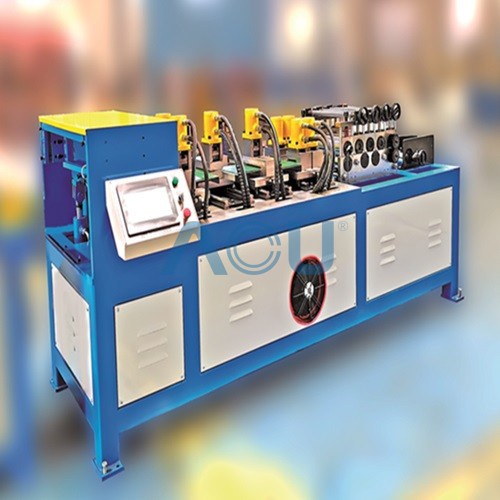
Once you define your application, you must evaluate the technical specifications that determine real-world performance. Two characteristics dominate this evaluation: air leakage and pressure drop. These metrics directly impact your energy bills and system balance, so you cannot afford to overlook them.
Air leakage measures how much air passes through a closed damper. A lower value indicates better sealing and tighter shutoff. Pressure drop measures airflow resistance when the damper blades sit fully open; a lower value indicates more efficient air performance. Both specifications matter, but they influence energy consumption differently. Pressure drop affects all intended airflow whenever the fan operates, while leakage energy depends on leak location, pressure difference, and conditioning load.
|
Specification |
What It Tells You |
Why It Matters |
|---|---|---|
|
Pressure Drop |
Resistance to airflow when blades are fully open |
Lower values reduce fan energy consumption |
|
Air Leakage |
Amount of air passing through a closed damper |
Lower values prevent conditioned air loss |
Industry standards classify leakage performance. For smoke dampers, IBC and IMC require leakage ratings of Class I or II. Energy codes prescribe maximum leakage rates for outdoor air dampers to ensure energy efficiency. For critical applications like hospitals and stairwells, specify dampers with low leakage ratings, such as Class I.
Energy codes mandate that economizer outdoor air and return air dampers meet maximum leakage rates. This requirement directly ties damper leakage class to energy efficiency by limiting unintended airflow, which reduces energy waste from conditioned air escaping or unconditioned air entering the system.
The relationship between leakage and efficiency is not linear. The lowest leakage rate is not always optimal. You must balance leakage performance against pressure drop for the best overall system performance. A damper design should minimize airflow resistance to reduce pressure drop across the system. The fan energy needed to move air through a damper ties directly to the resulting pressure drop.
Your material choice affects durability and thermal performance. Galvanized steel and aluminum each serve different environments.
Actuator compatibility represents a common point of failure. You must match the actuator's torque to the damper's requirements. Undersized actuators cannot reach required positions or disable fail-safe operations.
Control signal matching also demands attention. Match the actuator's input signal to your controller's output signal, and verify the fail-safe position for spring-return actuators.
A properly specified Air Damper Machine reduces strain on your equipment and potentially extends system lifespan. While cheaper alternatives offer lower upfront costs, they often lead to higher operational expenses over time. For complex systems where efficiency matters, invest in quality. The initial premium pays dividends through reduced energy waste and fewer service calls.
Start with your application, then size correctly, then verify performance data. A poorly specified Air Damper Machine wastes more energy than any upfront savings deliver. Choose manufacturers with proven quality. For tailored solutions balancing performance and budget, contact us today.
Check your local energy code. Choose a damper with Class I leakage rating for the tightest shutoff in critical applications.
Pair your air supply outlet with a compatible air damper. Match airflow ratings and control signals to avoid imbalance.
Seek manufacturers with proven quality standards. This ensures consistent quality and rigorous testing.
 Signup our newsletter to get update information, news, insight or promotions.
 FOSHAN ACU IMP.&EXP.CO.,LTD.

 IPv6 network supported
Our hours
Mon 11/21 - Wed 11/23: 9 AM - 8 PM
Thu 11/24: closed - Happy Thanksgiving!
Fri 11/25: 8 AM - 10 PM
Sat 11/26 - Sun 11/27: 10 AM - 9 PM
(all hours are Eastern Time)
Hi! Click one of our members below to chat on